

By Deborah Jeanne Sergeant
From the one-room schoolhouse to present times, women have always experienced a strong presence in teaching. But in more recent years, women have become more prominent in leadership roles in the education sector.
The ILO Group’s Superintendent’s Research Project recently released statistics on women’s roles in education:
• “Half of all superintendents appointed to the top job in the largest 100 school districts were women, according to the report. Despite that, at the current pace of change, it will take almost 30 years before there are as many women serving as superintendents as men, according to the study.
• “In the western United States, 37% of the superintendents are women — up from 30% last year. The highest percentage of female superintendents is in the Northeastern part of the country, with 46%. The number decreased from 54% from last year. The Southeast has the lowest percentage of female superintendents, with 22%.
• “Female superintendents are more likely than male superintendents to have a doctoral degree or to have been promoted from a deputy or interim superintendent.
• “In contrast, 53% of state superintendents this year are female, up from 47% last year.
• “Geographic differences persist, with the West and Midwest showing notable increases in women leaders, while the South continues to lag behind. Northeast: 46% women (17 of 37 districts) down from 54% in 2024. Midwest: 38% women (25 of 65 districts) up from 31% in 2024. West: 37% women (56 of 151 districts) up from 30% in 2024. Southeast: 22% women (33 of 150 districts) same as 2024. Southwest: 36% women (35 of 97 districts) down from 37% in 2024.”
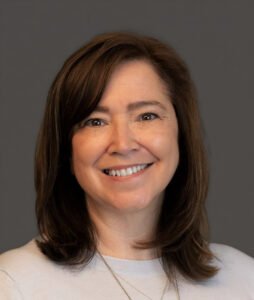
Rhonda Zajac, assistant teaching professor of educational leadership at the School of Education at Syracuse University, shared her thoughts on the emerging role of women in education:
Oswego County Business Magazine (OCBM): How has the role of women in education changed in the past generation?
Rhonda Zajac (RZ): I feel like in the 31 years I was in Syracuse City Schools, I saw a shift in the percentage of female leaders I had as principals and as district leadership roles expanded, you saw more in those roles. The superintendents are largely male but I’m seeing those gaps closing. In my new role—this is my first year—I definitely see more women pursuing the advanced degrees in educational leadership than men. That certainly creates a larger qualified talent pool for those district positions.
OB: Why have we seen this shift?
RZ: I think overall, women are seeking more leadership roles across fields and not just in education. Historically they were seen only as having strength in instruction. Women are perceiving themselves as more capable. Districts are prioritizing leaders that have been instructors and that have more emotional intelligence. It’s not that men cannot have those skills. But they want leaders who have strong skills in education and management. Women are being seen as more qualified. The culture piece often is association with women. Even our school boards are becoming more diverse which is leading to a broader definition of what a leader looks like. There’s a shortage. Women in teaching positions can have a path for advancement if that’s what they want to do. They don’t want a role that caps them financially or intellectually.
OCBM: How do you see women’s role in education changing in the future and why?
RZ: We’ll continue to see this growing trend of women in leadership. We’ll see more women working in finance departments and superintendents. We’re seeing more men than in the past getting into elementary teaching positions. I also see more men teaching in elementary ages than when I first did. The complexity of leadership roles in districts has increased over time. There’s more focus on equity, diversity and systems changes. Women are skilled at building relationships on one-to-one levels and creating networks of collaborators who can help connect across districts. Women are skilled at bringing leaders to the table. If you build systems of structures in the district when leaders change you can have sustained change over time.
Female Dean Representation
• Academic Deans (General): Women make up nearly 40% of academic deans and provosts across many US institutions.
• Business School Deans: In 2023-24, 30% of business school deans identifying as female, up from 26% in 2020-21.
• Medical School Deans: As of 2023, 28% of US medical school deans are women.
• The “Power Gap”: While women constitute a high percentage of deans, their representation drops significantly at the presidential level, where only 22% of campus presidencies are held by women, indicating a “power gap” one step from the top.
Source: American Association of University Women
Read about more Women in Education:
• Agatha Awuah: Educator is considered the architect behind OCC’s culture of evidence-based decision-making
• Sarah Gaffney: A product of the SUNY system, she has overseen a steady growth in enrollment at OCC
• Erica Hall: Program director is involved in developing curriculum, enrollment, community awareness and forming partnerships
• Jennifer King-Reese: Educator is proud of fostering greater communication among the district’s schools and employees
• Linda LeMura: She became a trailblazer in 2014 as the first lay female president of a Jesuit college in the U.S.
• Jennifer Nichols: From student to dean, administrator is settling into new position
• Kirsten Nielsen: As the founder of the physical therapist assistant program, she now serves as both its director and an instructor
• Amanda Petrie: P-TECH principal is following in her grandmother’s footsteps
• Lindi Quackenbush: Her father once observed she had more degrees than a thermometer
• Jennifer L. Ross: Interim dean was once told that she couldn’t do advanced math because she was a girl
• Donna Runner: Her mother’s commitment to education spurred superintendent’s success
• Naomi Ryfun: A love of teaching: A journey from biochemistry to education

