

By Stefan Yablonski
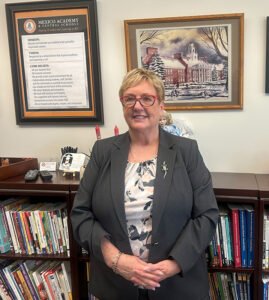
Donna Runner, superintendent at Mexico Academy and Central School District, grew up in a single-parent household and experienced poverty as a child in Columbus, Georgia.
“Although my mother faced many personal challenges, she deeply valued education and made sure I was in school every day. Because of her commitment, I became the first person in my family to attend college,” she said.
She initially enrolled at Philadelphia College of Bible [now Cairn University] to study social work, “as I felt drawn to helping others,” she added.
Through her exposure to education courses and the influence of “an exceptional head of the education department,” she ultimately changed her major to education.
It was a decision that shaped the course of her life, she said.
She later earned her doctorate degree from Drexel University in Philadelphia.
“My professional journey in education has included teaching multiple grade levels, serving as an academic math coach, principal, acting assistant superintendent of curriculum for the school district of Philadelphia and assistant superintendent of curriculum at Gouverneur Central School District,” she said. “In 2020, I was honored to join the Mexico Central School District as superintendent of schools.”
Challenges and rewards
One of the greatest challenges she faced was financing her college education.
“I worked many hours to remain enrolled and that experience taught me that some goals are worth fighting for. Early in my leadership career, I also encountered challenges related to being taken seriously as a woman in leadership, including lowered expectations and dismissive comments,” she said. “Navigating those moments required professional restraint, perseverance and learning how to advocate for myself while remaining focused on the work and its impact.
“The rewards of education far outweigh the challenges. I find great joy in watching students discover their strengths, find their niche and develop a passion for learning — especially when they are supported by a staff who truly believes in them. That belief can be transformative.”
She said that she is most proud of the accomplishments of the district’s students, particularly those who have faced poverty, trauma or disability and continue to persevere. “Their success reflects our commitment to equity and opportunity for all learners. Our staff plays an essential role in ensuring that every student is not only entitled to learn but is capable of learning and growing.”
“Our district strategic plan reflects both our values and our responsibility to students, families and staff,” she continued. “Over the past several years, we have made meaningful progress across each goal area by remaining focused on what matters most — high-quality teaching, whole-child support, responsible stewardship of resources and strong partnerships with our community.
“At the heart of our work is learning. We have strengthened instructional practice by implementing a consistent, vertically aligned, standards-based curriculum with clear learning goals and success criteria. The use of common formative and summative assessments allows our educators to respond to data in real time, differentiate instruction and ensure every student is making academic progress while developing ownership of their learning.”
Equally important is their commitment to supporting the whole child, she added. Through a comprehensive multi-tiered system of supports, they address academic, behavioral and social-emotional needs in an integrated way.
Strong systems require thoughtful management.
“We intentionally align budgets, staffing and resources to our instructional and student support priorities, while ensuring our facilities and digital environments are safe, secure and conducive to learning. Ongoing leadership development has been critical as we navigate change, drive innovation and sustain long-term impact.
“We recognize that schools don’t succeed alone. Through intentional partnerships, we actively engage families, students and staff as collaborators in school improvement, while strengthening relationships with local businesses, agencies and higher education institutions,” she said. “These partnerships expand opportunities for student leadership, civic engagement and service learning.
“As a woman in educational leadership, I believe progress is built through collaboration, empathy and a deep commitment to equity. Our strategic plan serves as both a roadmap and a promise — to continuously improve outcomes for students while supporting the adults who serve them every day.”
Education is a challenging yet profoundly rewarding career — especially for women who lead with purpose and perseverance, Runner said.
“My own journey, from classroom teacher to academic coach, principal and now superintendent, has reinforced my belief that every child can learn when provided the right supports and opportunities. Each role required me to grow as a leader — learning to listen deeply, make difficult decisions and advocate relentlessly for students and staff. I encourage anyone considering education to enter the field with eyes wide open. This work isn’t defined by a start and end time; it is an ongoing process that demands resilience, reflection and stamina,” she advised. “It’s not for the faint of heart. Staying strong, learning to prioritize and developing a tough outer shell — while keeping compassion at the center — are essential. When women embrace leadership in education, they not only shape systems and outcomes, but they model strength, balance and possibility for the next generation.”
Runner’s husband, Leon, is the pastor of Lowville Baptist Church. Their son and his family live in Japan, where he is a tenured associate professor at Kanazawa University.
Read about more Women in Education:
• Rhonda Zajac: Women’s Role in Education Shifts to Leading
• Agatha Awuah: Educator is considered the architect behind OCC’s culture of evidence-based decision-making
• Sarah Gaffney: A product of the SUNY system, she has overseen a steady growth in enrollment at OCC
• Erica Hall: Program director is involved in developing curriculum, enrollment, community awareness and forming partnerships
• Jennifer King-Reese: Educator is proud of fostering greater communication among the district’s schools and employees
• Linda LeMura: She became a trailblazer in 2014 as the first lay female president of a Jesuit college in the U.S.
• Jennifer Nichols: From student to dean, administrator is settling into new position
• Kirsten Nielsen: As the founder of the physical therapist assistant program, she now serves as both its director and an instructor
• Amanda Petrie: P-TECH principal is following in her grandmother’s footsteps
• Lindi Quackenbush: Her father once observed she had more degrees than a thermometer
• Jennifer L. Ross: Interim dean was once told that she couldn’t do advanced math because she was a girl
• Naomi Ryfun: A love of teaching: A journey from biochemistry to education

