

The growth of non-cash transaction volume is slated to rise by 6.4% this year. The choices are many, including debit and credit cards, digital wallets, instant payments and credit transfers.
By Deborah Jeanne Post
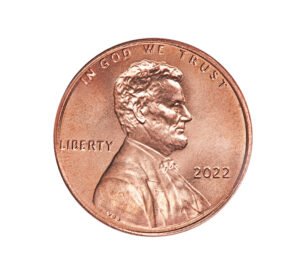 “A penny for your thoughts” may someday lack meaning as an idiom as the US Mint quit minting pennies in November 2025. Many banks have posted signs warning of a penny limit as they anticipate the coins becoming in short supply.
The economy represents the main reason behind why pennies are going extinct.
“More than anything, the discontinuation of the penny reflects the decline in the value of the dollar over the long term,” said Daniel McDowell, Maxwell Advisory Board professor of international affairs in political science at Syracuse University. “This is normal, though periods of higher inflation like we just experienced speed up that process. But the bottom line is that the value of a penny has declined to the point that they cost the government more to mint than they are worth. Even many households find them not worth holding onto because they are nearly worthless.”
Minting cents doesn’t make sense, as the cost to produce a penny increased from 1.3 cents to 3.69 cents in the past decade, according to the US Treasury. Materials, facilities and overhead have all risen in cost and quitting penny production will save an estimated $56 million in materials alone.
“Given the increasing number of non-cash transactions and the very low purchasing power of a single penny, the Department of the Treasury does not believe continued production is fiscally responsible or necessary to meet the needs of commerce in the United States,” states the Treasury’s website.
High inflation in recent years has caused many smaller retailers to pass along a surcharge for using a card. However, it appears paying cashless is still the favored means of payment despite the extra charge. Paymentsdive.com reports that in North America, the growth of non-cash transaction volume is slated to rise by 6.4% this year. The choices are many, including debit and credit cards, digital wallets, instant payments and credit transfers.
The Federal Reserve will continue to recirculate the approximate 114 billion pennies in the money supply. Eventually, retailers will have to begin rounding purchase prices to the nearest nickel for cash sales, when pennies are no longer available.
The National Council of State Legislators Nov. 21, 2025, report, “Elimination of the Penny: Cents-able Considerations” states: “The most recommended form of rounding is symmetrical rounding whereby if the final digit of the total transaction amount (including taxes) is 1, 2, 6 or 7 cents, the amount is rounded down to the nearest multiple of five. If the final digit is 3, 4, 8 or 9 cents, the amount is rounded up. Transactions totaling exactly $0.01 or $0.02 might be rounded up to $0.05. Rounding rules would not apply to payments made via electronic methods, checks, gift cards or other non-cash instruments.”
The Treasury recommends accepting pennies while they’re still in circulation and not rounding payments when the customer uses a non-cash means of payment. It’s also a good idea to make customers aware of rounding practices once they’re needed for cash payments. Posted signs explaining the change and social media posts may help customers understand how rounding works for cash payments.
Cessation of penny minting may seem like a step toward a cashless society, but McDowell doesn’t think so.
“Cash is not going anywhere, but the penny’s usefulness has passed because a dollar is not worth what it once was and so the penny it just is not worth the trouble anymore,” he said.
For now, businesses will still honor the penny as the situation unfolds and the number of pennies in circulation dwindles.
“As developments with the penny evolve, KeyBank is committed to keeping our clients informed by providing up-to-date resources at local branches and key.com/penny,” said Sarah Doud, communications consultant with KeyBank.
“KeyBank will continue to accept pennies for payments, deposits and cash transactions. If any of our branches run out of pennies, we will round cash payouts up to the nearest five cents. Rounding will only be used when the branch is out of pennies and may vary by day and by branch in the short term and future legislation or guidance from the US Department of Treasury may alter how transactions are handled in the absence of pennies. We also encourage our clients to simplify transactions by using digital tools when possible, such as electronic payments, direct or mobile app deposits and card-based payments.”


