


Trend reflects dramatic changes in the healthcare industry, according to expert
By Deborah Jeanne Sergeant
As more health systems absorb independent medical practices and physicians become employees, medical societies as organizations face a membership crisis.
The American Medical Association (AMA) states than in 2022, only 46.7% of doctors owned their practice, a drop from 60% in 2012.
This relates to medical society memberships because in part, physicians had relied upon their membership in medical societies to provide resources and support that they now receive from their employer.
The AMA also reports that its membership has fallen from 75% of American physicians in the 1950s to only 15%.
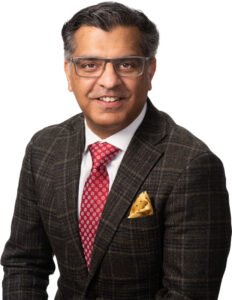
Physician Hemant Kalia, a councilor of the 7th District of the Medical Society of the State of New York — which covers Monroe, Livingston, Ontario, Seneca, Steuben, Wayne & Yates counties — blames aging leadership and a lack of interest among new physicians.
“Our mission and overall goals is to be the voice of physicians at the county and state level,” Kalia said. “We love advocacy work on all fronts, be it legislative reform, an organized medical staff in private practice and the day-to-day challenges physicians face, whether employed by a practice or hospital. We bridge a gap. Our goal is to be the voice of physicians and make sure that we educate the community on public health issues and patient-center models of care.”
Because so many new physicians have entered the more remunerative specialties—internal medicine, family medicine and primary care pay the least—these doctors tend to gravitate toward specialty-based organizations instead of joining county medical societies. It would give more bang-for-the-buck to focus on one’s specialty than a group bound by little more than geography.
Digital networking is more efficient, albeit less serendipitous.
Many doctors don’t view county medical societies as providing much value for the cost of dues. Social events are hard to squeeze into a busy physician’s schedule, for example.
Local medical societies — Onondaga County Medical Society and Medical Societies of Counties of Oneida, Herkimer, Madison, Chenango, Oswego, Cayuga and St. Lawrence — declined repeated requests for interview.
Kalia said that physician trust in their employers has decreased.
According to Kalia, recent research indicates that only 47% trust their healthcare system to make patient-centered decisions, arguably the better way to make healthcare decisions. That’s down from 53% from the previous year. Physicians tend to want to make decisions with patients, not make decisions for patients with the organization’s efficiency and benefit as a priority.
Despite fewer new physicians joining county medical societies, Kalia views the organizations as helpful both for the community and for physicians.
“If a patient is in need of a primary care provider and they’re having a hard time finding one, we can guide them on which practices are accepting, whether they want to go with a health system or a private practice.”
As for physicians, county medical societies also help with the aforementioned camaraderie and with advocacy for issues such as reimbursement and legislation.
“We provide a neutral platform to communicate with payors and have a discussion around topics specific to communities,” Kalia said.
He also views the future of county medical societies as focusing on all physicians, not just independently practicing ones. This could pull medical societies into providing information in areas such as contract negotiation, compensation and benefits, employee performance metrics, and noncompete clauses.
In addition, medical societies could also promote advocacy that goes beyond the independent practice to include pushing for improvements to health systems.
Kalia would also like to see membership that’s offered in tiers, in conjunction with healthcare systems or even free basic membership that would attract new physicians and possibly draw back experienced physicians.


