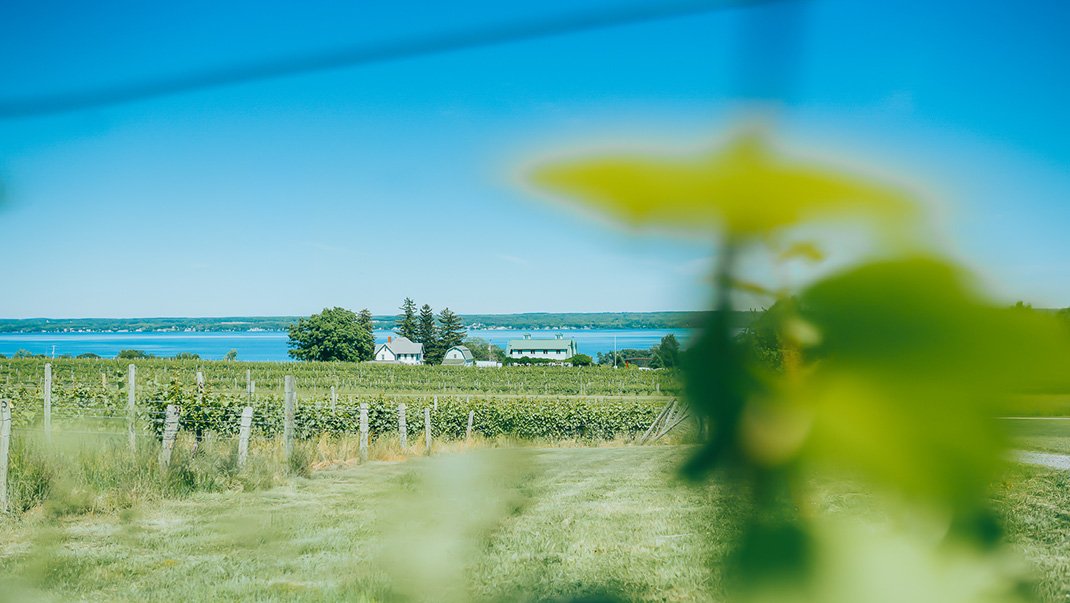
A devastating April frost, the loss of Canadian tourists and changing drinking habits have all contributed to hurting local wineries
By Aaron Gifford
When Peter Cherock grew up near the south end of Seneca Lake, wineries weren’t part of the beautiful landscape.
There were many vineyards, but most sold their grapes to a big processing plant in Hammondsport. When that business closed, he said, the growers needed to find something else to do with their crops.
In 1976, New York state passed legislation allowing farmers to make and sell wine on their property, removing the red tape that required them to do business with wholesalers. The Finger Lakes Wine Region was born.
“It really became a huge booming business,” said Cherock, now the mayor of Watkins Glen. “It still is. But yes, there’s always a lot to worry about.”
Half a century later, as the nation celebrates its semi-quincentennial, the industry survived recessions, weather disasters, a state-wide population decline and competition from an exploding craft beer industry.
In the past year alone, the Finger Lakes, with more than 140 wineries, sustained three more blows: A late April frost devastated grape buds and will inevitably decrease production for many wineries. Strained relations between the Canadian and U.S. governments have affected the flow of visitors from the north. And nationwide research indicates that alcohol consumption is decreasing at a rate that could discourage an entire industry.

The results of a Gallup Poll published in August indicate that the percentage of U.S. adults who drink alcohol has fallen to 54%, the lowest level in 90 years, largely due to health concerns. This is a sharp decline from a high of 71% between the mid-1970s and early 1980s and an 8% drop in just two years.
Additionally, drinkers are consuming less than they used to.
A record low of 24% who responded to the survey said they had a drink in the past 24 hours and 40% said it had been more than a week since they last consumed alcohol — the highest percentage since 2000, according to the report.
The “no amount of alcohol is safe” message that often comes across as a public service announcement is, at least in part, driving this trend.
“Young adults were initially quicker than older Americans to embrace the idea that drinking is detrimental, possibly because they hadn’t been as exposed to earlier advice that moderate drinking, particularly wine, is heart healthy. But the belief that drinking is detrimental is now gaining traction with older adults,” the report said.
“The trajectory of U.S. drinking could also depend on how much doctors, health authorities and policymakers reinforce the message that no amount of alcohol is risk-free,” it said.
Local grape farmers and winemakers are powerless to change public opinion about alcohol consumption, but state and federal governments can do more to help them maintain business with those who still drink and expand their customer base.
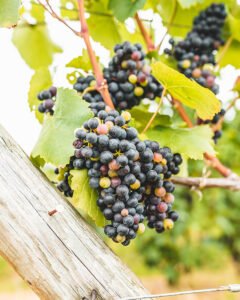 New York Gov. Kathy Hochul recently requested disaster relief money from federal agencies. She estimates the late April frost caused more than $30 million in damage for fruit farmers in several regions of the state, including Finger Lakes’ vineyards. The U.S. Department of Agriculture has a low-interest emergency loan program for agricultural businesses affected by weather disasters.
“New York’s growers are second to none and many have taken a significant hit, with some reporting upwards of a 100% loss of their crop and millions in economic loss,” Gov. Hochul said in a news release. “I also encourage New Yorkers to continue to support their local growers, whether it’s by buying fresh local products from the farm or purchasing the many products made from New York fruit.”
Scott Osborn, founder and owner of Fox Run Vineyards in Penn Yan, said the April frost will reduce his harvest by about 50% this season. However, last summer yielded an exceptionally high crop, so his wine production will remain strong in the months ahead despite the weather disaster.
“Last year was the second-largest harvest I’ve ever had,” said Osborn, who has run the winery since 1993. “We have a lot in bulk, but a lot of wineries aren’t as fortunate right now.”
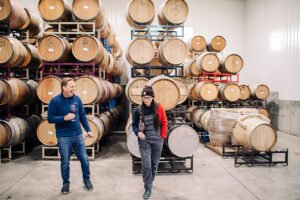
Osborn said businesses across the entire region, not just wineries, have noticed a major drop in Canadian customers. Neighbors from the north have traditionally made up about 10% of his summer customer base. In a typical year, he meets customers from about 50 different nations.
“They [Canadians] weren’t here last year and they won’t be here this year. We’ve all noticed it,” Osborn said. “The European market has also dried up. You can’t make up tourism.”
In a December 2025 report, the U.S. Congress’s Joint Economic Committee indicated that the number of passenger vehicles crossing into the United States from Canada decreased 20% in the past year, with some states reporting decreases of 27%.
In 2024, the report said, Canadian tourism contributed $20.5 billion to the U.S. economy and supported 140,000 American jobs. Disrupted diplomatic, economic and trade relations between the two nations have hurt small businesses, especially those near the border that rely on short-term stays by Canadian visitors.
“They don’t take a lot of wine back across, but they eat at our cafes, stay for a few days and drink local wine while they’re here,” Osborn said.
The changing tastes of younger drinkers pose another challenge.
Market research indicates a strong surge in sales of mass-produced, ready-to-drink premade cocktail products among Millennials and Gen Zers, to the detriment of the beer and wine industry.
“Wine drinkers are aging out, too, because of medications or health worries,” Osborn said.
Alcohol trends can be short-lived. Ready-to-drink cocktails could follow the path of wine coolers or Zima, a clear malt beverage that tasted like a weak gin and tonic, in the mid-1990s. Non alcoholic “mocktails” may just be a fad. But wine has prevailed for centuries.
“People in their 30s now will settle down, start families. With that lifestyle change, people start to prefer a glass of wine now and then,” Osborn said.
Cherock has also noticed the surging popularity of ready-to-drink cocktails and believes the local wine industry is taking a hit. Still, vineyards around here survived the cider craze and co-existed with small craft breweries. Several liquor distilleries have opened in recent years, but it remains to be seen if the mix of choices brings more visitors to the wine trails.
“Little mom and pop distilleries are opening. I don’t think it has peaked out yet,” Cherock said. “People’s tastes are changing.”
New York has taken steps to help wineries, but the response is often slow. It took years of lobbying before liquor laws were changed to allow liquor stores to open on Sunday. There’s a continual push for wine and liquor sales in grocery stores, which is common in other states. Reducing excise taxes could also help boost Finger Lakes wine sales.
“I think state taxes are a bit high on this stuff,” Cherock said. “In a Finger Lakes liquor store, California wine shouldn’t be cheaper than New York wine.”
For now, the vast majority of Finger Lakes wineries are pushing on despite recent hardships.
There are a few wineries for sale. Recent listings on the Vine Smart website include a 50-acre property on the west shore of Cayuga Lake for $2.49 million; a 15-acre property that includes a tasting room in Union Springs for $2.49 million; and a 26-acre property in Hector that includes a full bar and restaurant for $3.1 million.
In October, Wine Enthusiast magazine awarded its American Wine Region of the Year honor to New York’s Finger Lakes, highlighting the area’s variety of sparkling wines, Rieslings, chardonnays, cabernet francs and other heirloom varieties.

The article noted that this is an exceptional accomplishment, given the year-long challenges faced by grape farmers in Upstate New York.
“Farmers battle extreme freezes in the winter, humidity in the summer and increasingly, drought, torrential rainstorms and the odd frost,” the article says. “Considering most Finger Lakes producers are self-funded mom and pop operations without access to deep corporate pockets enjoyed in other wine regions, the region’s success feels even more like a David vs. Goliath situation.”
“This honor from Wine Enthusiast celebrates not only the Finger Lakes, but the strength and evolution of New York’s entire wine community,” Sam Filler, executive director of the New York Wine and Grape Foundation, said in a news release. “The American Wine Region of the Year Award affirms what generations of growers and winemakers have known: the Finger Lakes define what cool-climate excellence looks like in America.”
The foundation’s 2025 Vineyard Report said the Finger Lakes are No. 2 in the state for acreage, at 9,035. The Lake Erie region leads that category, with 17,653 acres.
Statewide, more than 155 varieties of grapes are grown across New York, the report said.