

The Lake Ontario National Marine Sanctuary and Its Potential for Central New York
The sanctuary designation is expected to boost the local economy and tourism industry. What does it mean, and when might local businesses begin to see its benefits?
By Stefan Yablonski
It’s a National Park — Under Water!
The Lake Ontario National Marine Sanctuary covers a 1,723-square-mile area in eastern Lake Ontario that is peppered with scores of historic shipwrecks and some aircraft as well. The designation promotes and increases responsible visitation, understanding and appreciation of this unique area without interfering with the lake’s commercial and recreational activities.
Our planet is an ocean planet. The National Marine Sanctuary System protects some of the most iconic underwater places throughout the United States — including one right here in Lake Ontario.
From Washington state to the Gulf of America and from the Great Lakes to the Pacific Islands, the system protects 18 underwater parks spanning more than 629,000 square miles of ocean and Great Lakes waters.
Hardly ever do most people think about what’s underneath Lake Ontario’s waters. Few people know of or appreciate the historic and cultural resources that lie beneath the water.
The National Oceanic Atmospheric Administration (NOAA) and the state of New York co-manage the Lake Ontario National Marine Sanctuary, the third designated in the Great Lakes.
Eastern Lake Ontario’s waters and coast tell the story of America’s diverse history and heritage, from early indigenous settlements to today.
The area includes transportation and trade routes for indigenous peoples and early European explorers and locations of military conflicts and maritime innovation. Eastern Lake Ontario supported the growth of the young American republic and the nation’s industrial core, including the Port of Oswego through which many of the materials and goods that fueled 19th-century America’s growth traveled.
The Lake Ontario National Marine Sanctuary is one of the most historically significant regions in the Great Lakes and North America, according to William Crist, chairman of the Lake Ontario National Marine Sanctuary advisory committee.
“This designation enhances the rich nautical history of Eastern Lake Ontario and brings much-deserved worldwide recognition to our area,” he said.
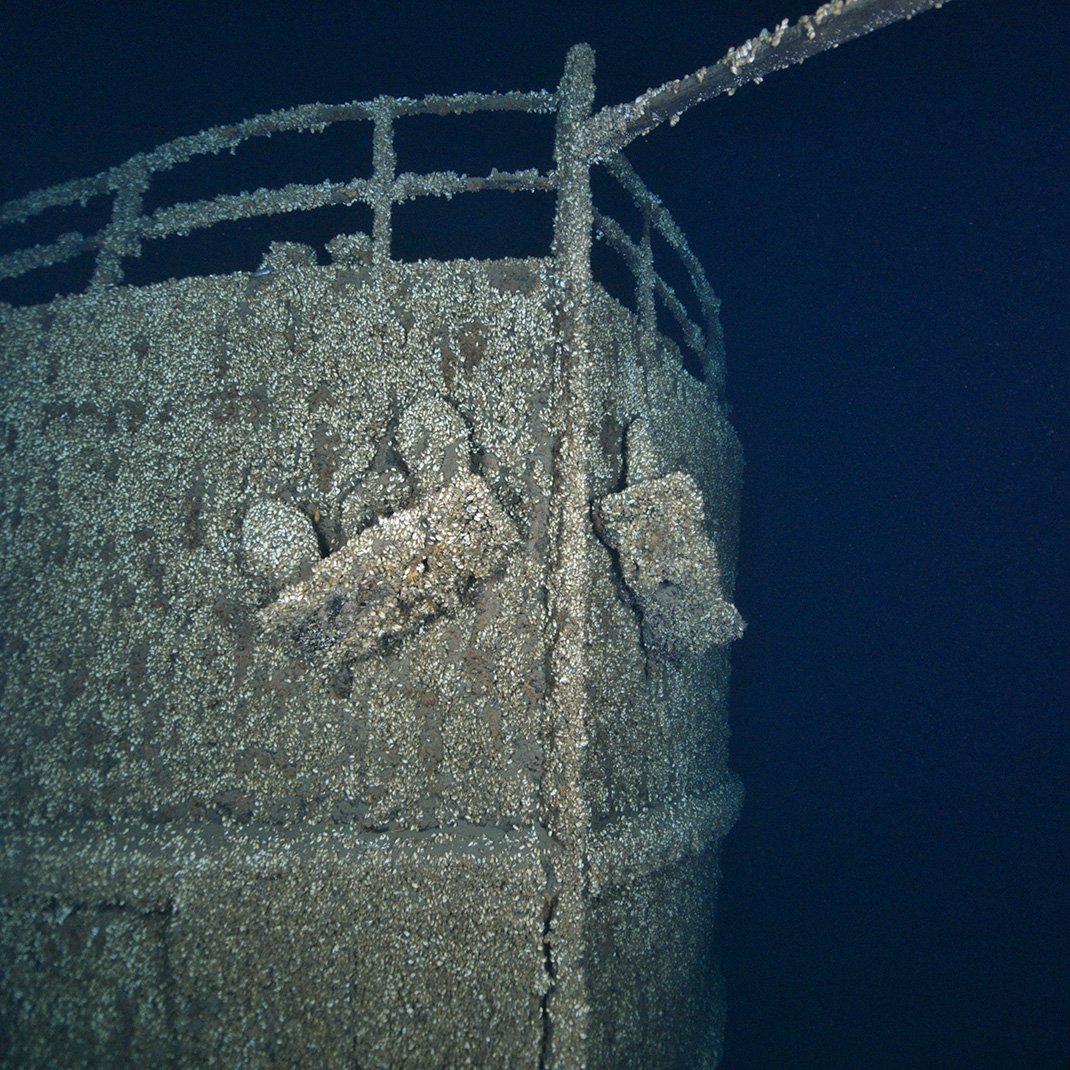
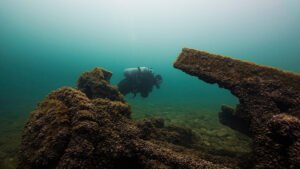
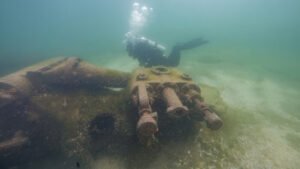
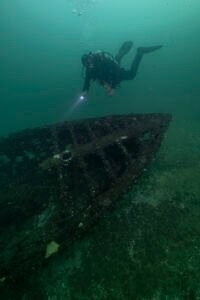
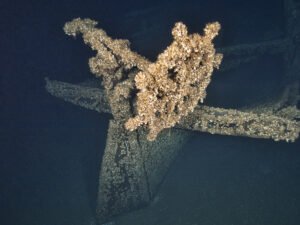
There are many nationally significant shipwrecks located in Lake Ontario and at least one known aircraft. The historical record indicates that more than 40 shipwrecks and two historic aircraft are also likely within its boundaries. Of those known shipwrecks, the St. Peter is on the National Register of Historic Places and the David W. Mills is New York state’s only Submerged Cultural Preserve and Dive Site in its Great Lakes.
In March 2024, NOAA, a federal agency within the US Department of Commerce, designated a 1,723-square-mile area in eastern Lake Ontario as the Lake Ontario National Marine Sanctuary — America’s 16th national marine sanctuary, a vast underwater park extending from the mouth of the St. Lawrence River to west of Rochester. This is an underwater park open to the public.
It provides new opportunities for research, education, recreation and maritime heritage-related tourism in local coastal communities and the broader Great Lakes region.
The term ‘sanctuary’ doesn’t mean an off-limits preserve. In this case it means just the opposite — to promote and increase responsible visitation, understanding and appreciation of this unique area without interfering with the lake’s commercial and recreational activities.
The sanctuary is designed to enhance public access and activities on the lake. There are no new restrictions on sportfishing, scuba diving, boating, water quality, commercial shipping or dredging. The federal designation doesn’t interfere with existing commercial and recreational activities on the lake, nor impose limits on those who own homes or camps along the shoreline. But the sanctuary designation makes it a federal crime to disturb submerged artifacts.
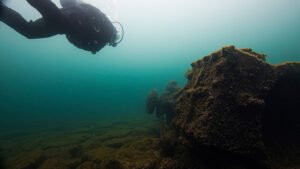
“That’s one piece of preservation of a sanctuary — look as much as you want, touch a little bit. But don’t take,” Crist said. “Think about when you go to a national park; you walk in and do everything you want to do, but there is a level of honesty and respect of what you are seeing and witnessing. But let’s leave it for someone else to see and enjoy. There are dive shops that will take an excursion to some of these locations. They would have a roster of who was there. But it’s not that organized. I don’t see it getting that organized either. I think education is a big part. ‘Hey, we shouldn’t do this, we’d like this to carry on for generations.’”
“The Great Lake Ontario National Marine Sanctuary includes unique and significant shipwrecks and aircraft within one of the most historically significant regions in the Great Lakes and North America,” said Oswego County Administrator Philip Church, chairman of the local nominating task force.
In January 2017, the adjacent counties and the city of Oswego, with support from the governor of New York, submitted a sanctuary nomination for the area to NOAA. A diverse group of governments and non governmental organizations, including the Onondaga Nation, regional and local units of government historical societies, museums, recreation, conservation, tourism and education groups, endorsed the nomination.
“The designation of the Lake Ontario National Marine Sanctuary is important, not only for its heritage but for the cooperative effort that led us here,” Church said. “It represents 10 years of tireless work by NOAA and state staff, public officials and civic organizations and dedicated private citizens who volunteered countless hours to help bring this designation to fruition.”
The application was based on a similar Great Lakes model, the Thunder Bay National Marine Sanctuary in Alpena, Michigan, where there have been significant economic benefits to the region.
It’s estimated that Thunder Bay National Marine Sanctuary on Lake Huron annually generates more than $100 million to the regional economy and supports more than 1,500 jobs. The visitor center for Thunder Bay National Marine Sanctuary is a major tourism destination for the region, hosting approximately 60,000 visitors annually.
Church said he sees the sanctuary desgnation impact on this region being similar — if not greater.
“One of the things NOAA is doing for the first time — a happy coincidence — they are conducting an economic impact study now so they will have a baseline and then come back in five, 10 years and do another one and see what impact there is,” Church said.
People behind the effort

“This whole thing became the brainchild of Phil Church and Dale Currier, two local divers,” said Crist. “They knew about the wreck of the Mills and some other things. They started thinking about having a sanctuary. Marine sanctuaries have been around for around 50 years. They are like national parks, but under water. So, it kind of came to be in 2015.”
“We submitted a request and it’s kind of ass-backwards in a sense,” Crist continued. “NOAA usually discovers those opportunities on their own. But in this case, we kind of knocked on their door and said, ‘Hey we think we’ve got something here in eastern Lake Ontario. Why don’t you come and look?’ So, they did and they thought, ‘yeah it looks like you really have something here.’”
“Dale Currier and myself and Dave White of New York Sea Grant [retired 2022. White had been with NYSG for 38 years] the Maritime Foundation and NYSG … we used to hold an annual event, Great Lakes Underwater,” Church said. “We promoted tourism; tried to promote that shipwrecks were a resource. But there was no organized way to do all that.”
What they didn’t know was that a few of those events were attended by someone from NOOA.
They had created a sanctuary program, the first one was the US Monitor, but they hadn’t created any more in 20 years.
“Around 2013, 2014 they decided to look at creating more. They allowed communities to nominate themselves. We were notified of eligibility, got permission from the legislature to pursue it and worked with Sea Grant and brought in the three other counties — Wayne, Cayuga and Jefferson — to create an area big enough to convince them that this was something worth doing,” Church explained. “In the next few years, 2015 to 2017, we had a task force created from all four countries and submitted the nomination document, a 25-page nomination, we had to answer certain questions. NOAA felt it was a very good nomination. Our effort was successful. Over the next seven years they went through the designation process, did all their checks to make sure that everything was accurate. Finally in 2024 they designated it.”
NOAA has contracted with a group to do a facilities study to look at the four-county region to see if a physical location for a footprint was built, where should it be? Oswego is a possibility, Crist said.
Representatives of the four counties and city of Oswego announced Sept. 4, 2015, that they were pursuing a nomination to NOAA to nominate southeastern Lake Ontario as a National Marine Sanctuary. The announcement was made at the Lakes of NY exhibit at the New York State Fair.
The Lake Ontario National Marine Sanctuary was officially finalized and designated by NOAA on June 5, 2024. Officials celebrated the historic milestone with a dedication ceremony at Cahill Pier in Oswego on Sept. 6, 2024.
“It has been used since 2024. The federal side of funding has slowed down, so we are still in the process of enabling some funding,” Crist said. “We initially thought we had like 45, 50 wrecks. But we have identified more — we are now up to 73. We believe it could be more than 100 that we can find. We record those and really the stories behind how they got to the bottom of the lake. We discovered one airplane, but we know that there are at least three other ones down there. One of them is Getaway Gertie, the B-24. According to local lore, some people say that we found it but haven’t released the coordinates of where it is. We think it has probably broken up into many places. You can’t say there is one wreck site, one location. That’s a misnomer.
“From my perspective, what the historical aspect of this area was and still is, is fascinating. Boats from Fair Haven that were taking loads of coal that was being railcared out from West Virginia and Pennsylvania and shipped out to all areas of the Great Lakes; that is interesting to know those wrecks are sitting out there, raw timber that they were going to use to make matches at the Diamond Match Company or bootleggers rum runners’ vessels that are down there — that still have rum in them!”
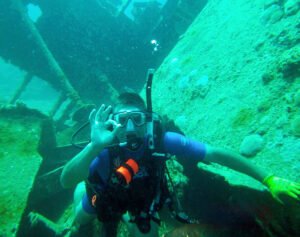
“Many of the vessels we are talking about are in 300, 400, 500 or 600 feet of water. But they are perfectly preserved; they are sitting on the bottom straight up with full masts,” Crist added. “Only parts can be dived because of the depth of water you’re dealing with. Off Oswego, there are several wrecks that are diveable in recreational limits.”
“The sanctuary has been designated for about a year. They don’t have any buoys out yet; there are 16 buoy permits pending. It got held up by the federal government shutdown,” Church said. “What they will do is place buoys on 16 of the wrecks that they have found. So, it will take a couple years to get up and running. What they are doing now is a lot of the on-shore programming — educational programs, public events and still mapping. We hope someday to have an interpretive center. The last couple years NOAA has had research vessels come in and map the lake bottom in the area to find out what resources are actually there.
“We knew the locations of six or seven, but we knew from historical records that there could be around 70. Just with the area they have mapped so far they have found 69. They are coming back this summer to do more mapping. If Gertie is in the sanctuary, my personal belief is it has broken up. It will be hard to recognize,” Church said.
Designation to Draw Research Dollars, Improve Tourism
The goals of the sanctuary program include economic development and tourism and also attracting research dollars to the area from around the world. Different universities have used the sanctuary as a resource. As the only higher education institution in New York state on the shores of Lake Ontario and with a lot of existing research related to this crucial body of water, SUNY Oswego is uniquely positioned as a partner going forward.
The college created Great Lakes Institute, said Oswego County Administrator Philip Church, chairman of the local nominating task force. It connects schoolchildren and other community members with educational opportunities tied to the Lake Ontario National Marine Sanctuary through a $100,000 grant.
“A Day in the Life at the Lake Ontario National Marine Sanctuary,” funded through the National Marine Sanctuary Foundation, provides SUNY Oswego students with opportunities to gain experience planning and delivering educational programs on the lakeside campus and Rice Creek Field Station.
“NOAA will coordinate with local school districts to do programs,” Church said. “We want educational programs that would expose young people to potential careers in marine sciences. That is already underway. So, a lot of progress is already being made.”


