

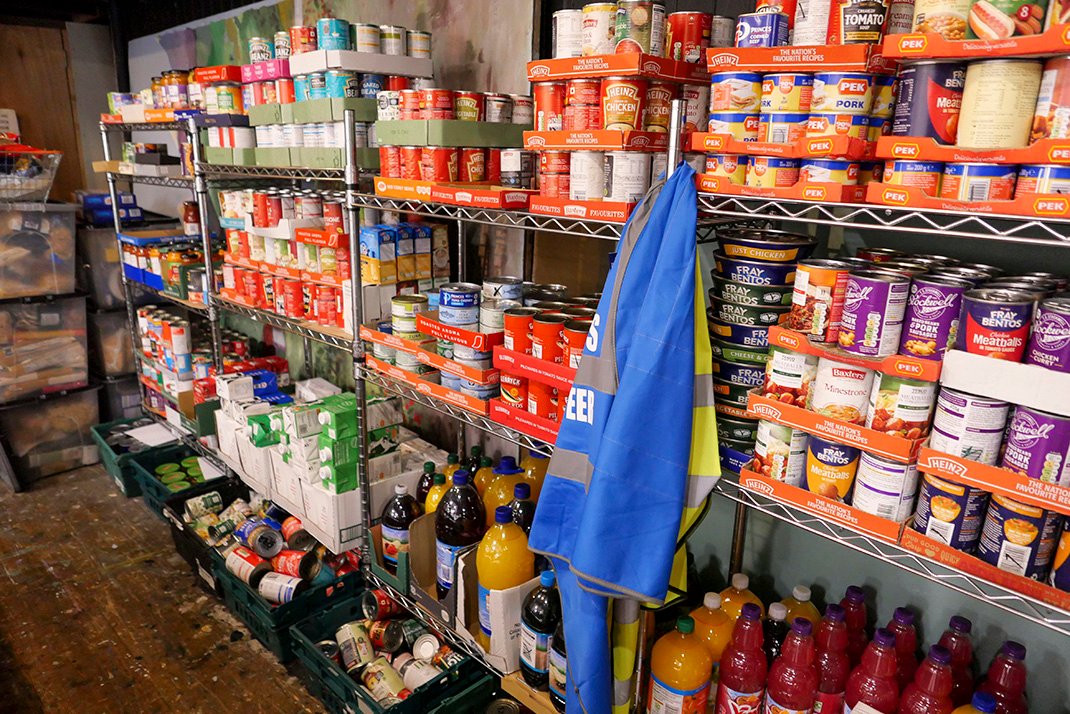
Food insecurity in 2023 in Onondaga County was at 13.2%; in Oswego County, 14.5%.
By Mary Beth Roach
“We want to give a hand up, not a handout,” said Lynn Hy, chief development officer for the Food Bank of Central New York.
And toward that end, the organization distributed more than 11,260 tons of food through 500 community partners in 11 counties between July 1, 2024, and June 30, 2025, its fiscal year.
These numbers underscore the need and the issue of food insecurity in Central New York. Add to this, the FeedingAmerica.com website reports that food insecurity in 2023 in Onondaga County was at 13.2% and Oswego County was 14.5%.
The partners are locations and programs that Hy referred to as the emergency food network, including food pantries, soup kitchens and emergency shelters. There are also well as health care organizations; schools; and low-income senior housing communities.
“We really want to partner with those that may be serving populations that need emergency food assistance,” Hy said. The organization is “really trying to meet people where they are because we know that there are so many barriers for individuals and families to access food.”
One of the newest partners is ConnextCare. Starting this past August, food pantries have been set up in all of ConnextCare’s six main practice sites.
“Knowing first-hand the struggles our patients face with food insecurity, I was thrilled that we could partner to bring additional resources into our community,” said Tricia Peter-Clark, ConnextCare’s president and chief executive officer.
As she explained, at ConnextCare, all patients are screened for health-related social needs, which includes food security.
“When we identify a patient with food insecurity, they now leave the health center with food for themselves as well as all of the members in their household and our care managers work with the patients to secure long-term support, so they do not have to choose medication over meals,” Peter-Clark said.
There had been an increase in requests until the past few months when the numbers seem to have plateaued, Hy said, adding that the increase was occurring especially after all of the COVID-19 benefits that had been put in place on the federal level started to end.
To meet the requests, the Food Bank has three main food streams, Hy said. They work with the USDA food commodities budget; more than 100 retail locations, the Farm Bureau and local growers; and then they purchase food directly from distributors.
Hy credited the community, as a whole for helping to provide the resources needed for the Food Bank to continue its mission. She cited thousands of individuals who make financial donations; the more than 1,500 individuals who volunteered more than 9,000 hours last year to help sort and pack the food and organizations that alongside the Food Bank and help make sure that nutritious food is available.
“We’re really fortunate to live in the community that we do and to have the support that that we do receive,” she said.


