All Things Oz Museum a major tourist draw in Chittenango
By Tom and Jerry Caraccioli
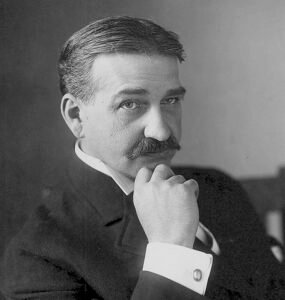
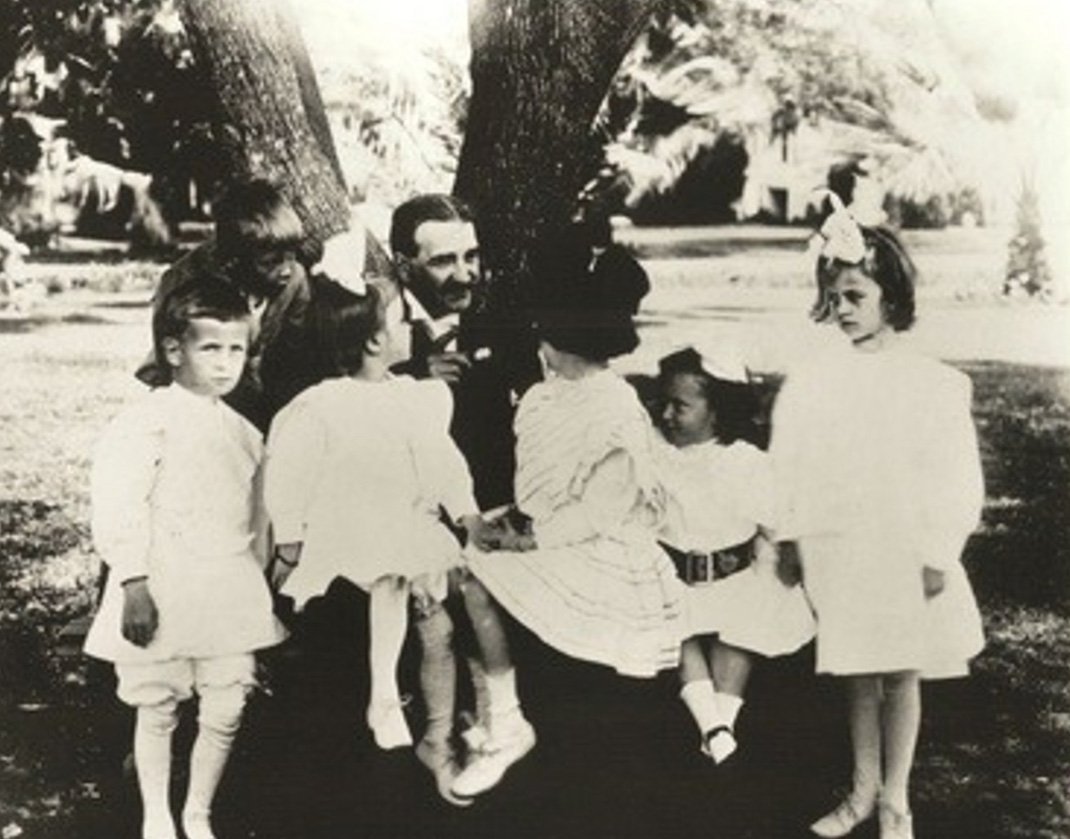
As a sickly child growing up, Lyman Frank Baum had health issues that led him to develop an imaginative, dreamer spirit while convalescing. After receiving a children’s printing press during that time, he also developed a passion for writing.
Born in Chittenango in 1856, the sickly boy would live there for the first five or six years of his life. The family then moved just north of Syracuse to Mattydale where he would go on to become a noted author during the end of the 19th century and beginning of the 20th century.
Better known as L. Frank Baum, he wrote a series of 14 books throughout his storied, literary career.
None was bigger or more popular than his first.
“The first of the books — The Wonderful Wizard of Oz — was a bestselling book from 1900 to 1903,” All Things Oz Museum manager Allison Lehr said. “That book did very well. He was known prior to this book, but this is what put him over the top. He didn’t really have any intention of writing a sequel but ended up writing 13 more in the Oz series.”
While it’s hard to say with 100% certainty how much of Baum’s work was influenced by his time growing up in Chittenango and Mattydale, his roots do seem to shine through in some of the details of his reputed series. If you close your eyes and tap your heels three times, you might even feel a sense of home as you ramble through the Central New York communities of his youth.
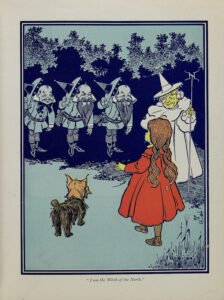
The bucolic greens of his “Land of Oz” mimic the lush farmlands of the area. And some historians believe the yellow brick road may have derived from yellow-hued planks that lined his Mattydale neighborhood roadways or the common practice of using yellow bricks in nearby places like Ithaca and Peekskill Military Academy, among others.
“The family had an estate called Roselawn,” Lehr explained. “We speculate there are several things from his childhood that influenced his stories. He spent a lot of time making up his own fun. That’s part of what kept him so young at heart most of the time.
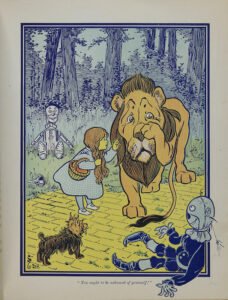 “There was a large wooded area near his house that we think very well could have influenced the ‘haunted forest’ area. And Mattydale had wooden plank roads that we think influenced the yellow brick road. We can’t say there is anything specific, but I do think we run into some things that very likely influenced his storytelling.”
While some residents of Central New York may want to believe “Oz” is based on a similar sounding nicknamed community north of Syracuse on the shores of Lake Ontario, that’s not the case.
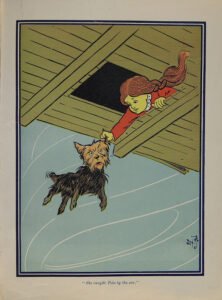 Legend has it, while telling the story of a ‘magical place’ to neighborhood kids, he was asked its name. He fumbled for a moment and noticed a nearby filing cabinet that was labeled O-Z. From there he told the kids the name of the magical place is Oz. For many years, his wife, Maude, leaned into that story and even mentioned how she still owned the filing cabinet.
Baum’s books came to life on the silver screen in 1939, 20 years after his death, when the Metro-Goldwyn-Mayer (MGM) movie studios adapted his children’s books into an Academy Award-winning movie that is beloved as much today as it was when it first hit the movie theatres.
While it is nearly impossible to know how many times the 1939 film classic has aired, many cinephiles and movie experts claim it to be one of the most viewed movies in the history of film. It has become, without a doubt, one of the world’s most beloved stories and movies of all time.
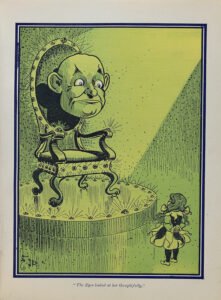 “I think he knew, to a degree, that his stories were going to stand the test of time,” Lehr said. “But I don’t think anyone could have ever imagined what it has become, not even in your wildest dreams.”
In the end, Baum just wanted to make kids happy. His stories weren’t scary, moral or lesson-based. Though there are a lot of lessons taken from them, he wanted something that was a fun, magical adventure that immersed children.
For more than 125 years, that is exactly what his classic story continues to be.