

By Stefan Yablonski
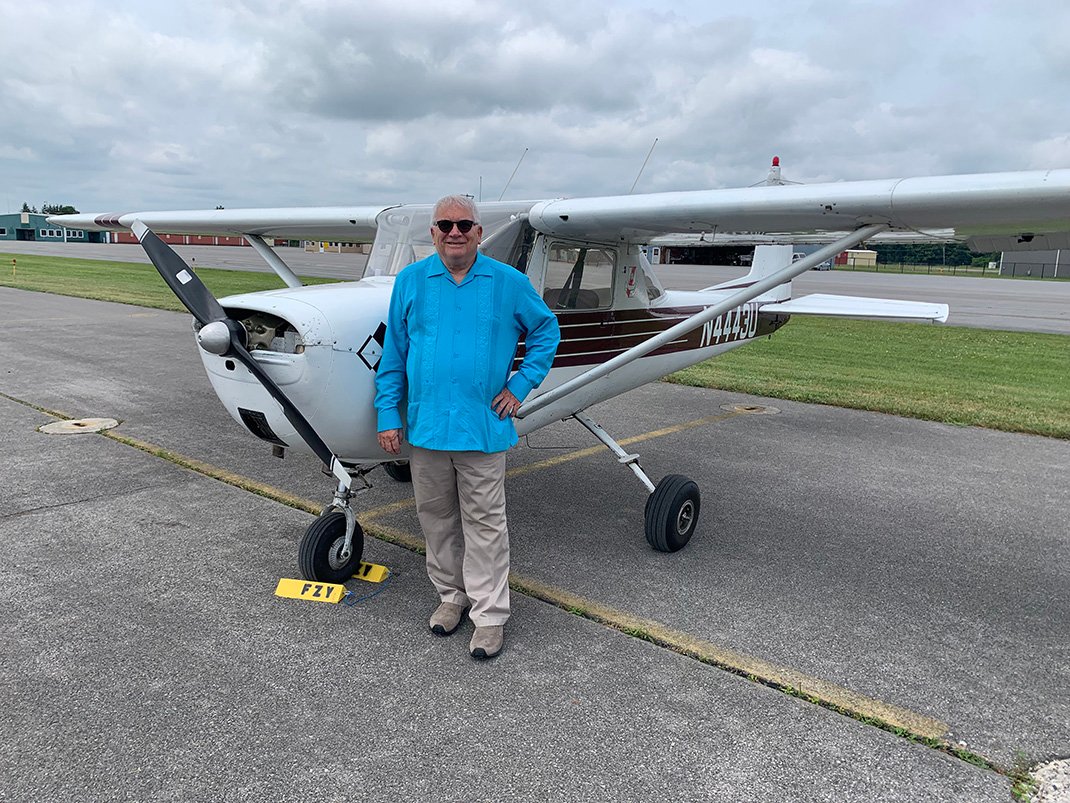
Dale A. Currier grew up on the shores of Lake Champlain in northeastern New York.
From age 1 he has been involved in many water-based activities, scuba diving, fishing, boating and maritime history — in freshwater lakes and oceans worldwide.
A scuba diver since age 13, he got certified in 1971 through the YMCA scuba diver program. Since then, as a YMCA and NAUI instructor and instructor trainer, he has introduced more than 2,000 people to scuba diving. His dive log includes more than 5,500 dives — from clear, warm tropical climes to ice covered lakes and commercial diving.
“I haven’t dived for a couple years because I have had some medical issues. But I hope to get back in the water this summer,” he said. “I am coming up on 73.”
Currier was the founder of the David W. Mills Shipwreck Documentation project on Lake Ontario at Oswego, which became the first New York state designated Submerged Cultural Resource Site in New York’s Great Lakes.
The Mills project served as the genesis of the National Oceanic Atmospheric Administration (NOAA) Lake Ontario National Marine Sanctuary where he has served on the pre designation advisory council and the Sanctuary Advisory Council.
“I’ve been involved in all of this since the very, very beginning — 30-some-odd years ago. Phil Church and I started the David Mills project and I want to say that was 1990,” he said. “So, yeah, I have been with this since the very beginning.
“Dave White from Sea Grant and I sat out at Rudy’s and he told me things they wanted to do with an underwater park and I listened and he said, ‘let’s do it.’ It took a long time, but we did it.”
Somebody from NOAA knew what they had been doing.
“The Mills project in 2000 was the first submerged cultural resource park officially in New York state’s great lake and people from Sea Grant knew what we were doing — Sea Grant is part of NOAA,” he said. “A guy from NOAA that knew Dave White real well and knew what was going on with sanctuaries; he came and knocked on Dave’s door and said, ‘hey they are opening nominations again.’ They hadn’t been open for sanctuaries for a number of years.”
So, a group of people got together; Phil Church led the charge and gathered all four counties and other people not just county people. They put together the prospectus for creating a sanctuary.
“That was a rather large document. We got it all together and submitted it and it was accepted. It went through the rest of the process in Washington and they said, ‘you are now going to be the 16th national marine sanctuary.’ Now there are 18. It was a long time coming,” Currier said.
When doing the Mills project, one year at the state fair they had a huge exhibit about shipwrecks.
“It was the largest exhibit at the fair that year. Dave and I spearheaded that,” Currier said. “It even got written up in the New York Times; ‘you really need to go see this,’ they said. We had worked with teachers on some curriculum stuff a long, long time ago. All this is coming back on steroids and it is great to see.
“Oh, it’s more than a warm and fuzzy feeling. At the advisory council meeting (June 25) up in Sackett’s Harbor, some people involved for decades either on the committee or still concerned, interested citizens, came to the meeting and said, ‘this is what we have looked forward to’ and now that we have people from NOAA assigned to work on this and Bill (Crist) and Katie Malinowski as our chair and vice chair — it is going great guns. So, it is great to see.”
Currier’s non maritime professional career has included a variety of public safety disciplines, industrial safety and security, management training and development and education. Since 2002 his full-time dedication is to the emerging field of emergency management primarily at the federal, state and local levels. Now semi-retired he consults with a wide variety of organizations in emergency management and performance improvement.
He lives in Oswego with his wife, Diane, and two dogs, Tybee and Lucia. He is the proud father of two daughters and ‘‘Pops” to three grandchildren.
People Behind the Lake Ontario National Marine Sanctuary
Philip R. Church
Philip Church is the county administrator for Oswego County. He holds a Master of Arts in Public Administration from the Maxwell School, Syracuse University.
Beginning in 2014 he chaired a four-county task force to nominate historic shipwrecks to become the Lake Ontario National Marine Sanctuary and worked with state and federal agencies throughout the successful 10-year designation process.
An avid shipwreck diver and photographer, Church is deeply involved in submerged maritime heritage preservation efforts. As a volunteer, he directed the Oswego Maritime Foundation’s submerged cultural resources program and helped establish the state’s first underwater shipwreck preserve in Lake Ontario, highlighted by the first live broadcast of an underwater ribbon-cutting. He worked with New York Sea Grant and Seaway Trail to establish four model underwater scuba diving preserves to enhance preservation and tourism along the Seaway Trail.
Bill Crist
An educator spanning more than 40 years, Crist is retired as the superintendent of schools for the Diocese of Syracuse, having previously served as interim superintendent of schools for the Massena Central School District and superintendent in the Oswego City School District. He was an educator in the Oswego City School District for 31 years and is also a graduate of the school district.
Crist holds degrees from Ithaca College, Cornell University and SUNY-Oswego. He is a certified dive master and assistant instructor with PADI and enjoys the underwater world of adventure and discovery. He served on the pre-designation Sanctuary Advisory Council as a member on the education seat, as well as serving as the chair of the council, from inception to designation.
In his spare time, he enjoys the outdoors with family and friends, including: diving, fishing, boating, golfing, hiking, archery and hunting.
He is pursuing a USCG captain’s license.


