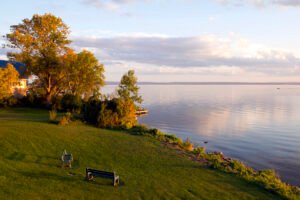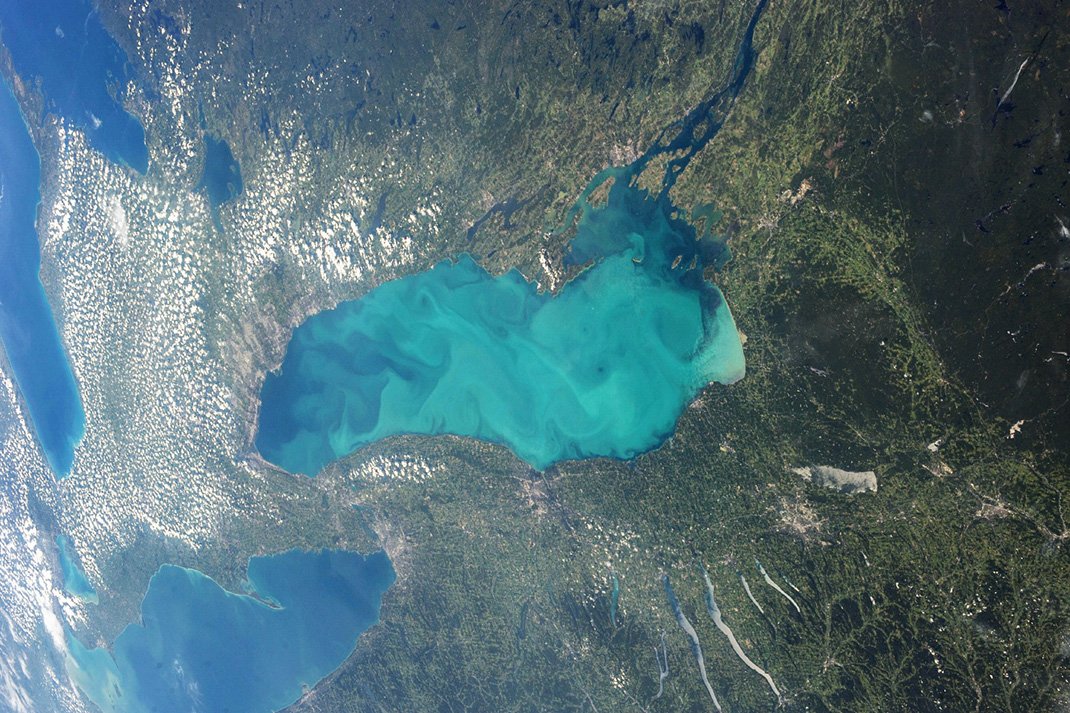
Lake is the engine that has shaped — and continues to power — Central New York
by Tim Nekritz | nekritz@gmail.com
A good portion of my job involves speaking with SUNY Oswego students and a common question is: What made them want to attend our university?
A very common answer: The lake.
And I realize this is an answer, an attraction that resonates back generations, centuries and maybe back beyond recorded history.
The late former mayor of Oswego, John Sullivan, pointed out that at some point many in the Port City erected buildings with their backs to the lake. That we have, in some way, taken this Great Lake with a coastline that anchors Oswego County for granted.
But we’re also starting to see more attention and appreciation for the lake and this is a big key to the county’s future.
The first known residents of the area were members of the Iroquois Confederacy, drawn by the natural resources including the lake in what is believed to be the 13th and 14th century, if not earlier. They gave the city and county its name, with “Oswego” being a rough translation of their name for “the pouring-out place,” where the namesake river empties into Lake Ontario.
Since Samuel de Champlain’s visit in 1615 to British and Dutch settlers around a century later, Lake Ontario has been a draw for trade and residency. Forts along the lakeshore and access to waterways provided strategic advantage that led to battles during the French and Indian War Seven Years War in 1756 and during the War of 1812.
And while our lake shoreline has enjoyed peace for more than two centuries since, the body of water and its key location continued to influence the region, the nation and beyond.
Economic engine
 The start of the 19th century saw the United States arrive as a global powerhouse and destination, between the Louisiana Purchase nearly doubling the land mass that the nation claimed and the War of 1812 settling the question of independence.
As America grew and expanded, its trade and a flow of immigrants to grow the country needed a point of entry that granted easy access and a transportation system into the expanding nation. Enter the port of Oswego, connecting to rivers and later railroads and the Erie Canal to move people and goods further inland.
The business of the properties on the lucrative Oswego Harbor brought a prominent figure known to local lore. In 1830, abolitionist Gerrit Smith won, at auction, rights to what became an eastside port facility called The Cove. That property set him up for life. To return his appreciation to the community, Smith underwrote local landmark the Oswego Public Library, run for decades — interestingly — by John Edwards, who was an unsuccessful bidder at that 1830 auction. Beyond its architecture, it notably reflected its benefactor’s spirit of equity, stating explicitly that anybody of any race, color or creed could get a library card.
While Smith had graduated as the valedictorian of Hamilton College — and married the college president’s daughter — a man who had to drop out of Hamilton for health reasons in the 1840s would be drawn to the Port City and provide an even bigger impact on Oswego because of his concern for those who came to work the port and related industries.
Edward Austin Sheldon did not bring the pedigree and name of Smith when he came to Oswego as a partner in a nursery owned by J.W.P. Allen. When that enterprise did not bear fruit, Allen bought out Sheldon’s share for lots of land in what was then the second fastest growing city in New York state.
A deeply religious man who cared about his fellow humans, Sheldon wanted “to investigate the condition of the poorer classes in Oswego,” then a boomtown with a need for labor that attracted many unschooled workers, often immigrants and their families. His informal yet comprehensive surveying found “fifteen hundred persons who could neither read nor write,” he wrote in his autobiography.
Attempts to establish education for these youth led to Sheldon being asked to run the Orphan and Free School Association and despite his best efforts, the organization proved unsuccessful. But that lit a fire in Sheldon to improve education and develop new ideas that culminated in the foundation of the Oswego Primary Teachers Training School in 1861 and development of the Oswego Method which influenced institutions throughout the United States, as well as Japan, Brazil, the Philippines and beyond.
That school, today known as SUNY Oswego, established the Great Lakes Institute in 2024 to study the lake across many dimensions, which is one piece of a larger puzzle that looks toward auspicious future opportunities regarding the lake.
A sanctuary and opportunity
Perhaps the biggest development for the region’s Great Lake also took place in 2024, with the Lake Ontario National Marine Sanctuary established by the National Oceanic and Atmospheric Administration. The sanctuary encompasses 1,722 square miles of eastern Lake Ontario waters and bottomlands for Oswego County as well as Jefferson, Cayuga and Wayne counties.
“Lake Ontario National Marine Sanctuary will celebrate the region’s maritime cultural history and provide new opportunities for research, education, recreation and maritime heritage-related tourism in local coastal communities,” the marine sanctuary’s website notes. “The eastern corridor is one of the most historically significant regions in the Great Lakes and the country, as it has been critical to maritime trade and transportation for centuries, beginning with the canoes and boats of early Indigenous peoples.”
But what lies beneath, the remnants of the past, can point to future tourism and technological opportunities. The sanctuary’s boundaries house “41 known shipwrecks and one aircraft representing events spanning more than 200 years of our nation’s history,” the website said, with historical records indicating “an additional 19 shipwrecks, three aircraft and several other underwater archaeological sites may be located there.”
Oswego County Administrator Philip Church (a longtime friend) was both a driving force behind the Lake Ontario National Marine Sanctuary and the person who introduced me to the fascinating history and possibilities of shipwreck-related tourism for legions of divers and their families.
“Now the truly rewarding effort begins as our local communities, in partnership with federal and state agencies, work to fulfill the educational, economic, research and conservational potential of the Lake Ontario National Marine Sanctuary,” Church said at the time of the sanctuary’s establishment.
In addition, the challenges of reaching some of the shipwrecks — at depths that might not be prudent for humans to navigate — has the potential to drive developments in underwater autonomous exploration. Which is a fancy way of saying local universities and companies developing robotic devices to explore shipwrecks and maybe even retrieve important data and artifacts.
Supporting a thriving industry
But Lake Ontario — as part of the Great Lakes chain that is the largest group of connected freshwater lakes in the world by total area — already provides a bounty of tourism for Oswego County and the region.
Sportfishing is king in this court, as the New York State Department of Environmental Conservation estimates a $42 million impact on the county. Salmon runs bring anglers to waterways across the county and beyond to enjoy world-renowned opportunities.
Lake Ontario is a key draw in a tourism industry that — according to a story in this magazine’s Progress edition — welcomes $235 million in spending annually for local businesses while generating $13.8 million in county tax revenue and $90.9 million in local employment income.
From the late-July Harborfest celebration to year-round attractions like the H. Lee White Marine Museum and aforementioned Fort Ontario, the lake draws visitors of all ages and interest to the city and county.
And the lake continues to attract new opportunities to the region, including American Cruise Lines starting this year. The company will bring luxury cruises through town as part of a multi-day tour of the Great Lakes and Thousand Islands. Cruise passengers’ stop in the city will allow them to experience local history, food and attractions.
Lake Ontario means business every day, especially through the Port of Oswego Authority. The first port of call and freshwater port on the St. Lawrence Seaway continues its role in bringing goods into the country as a point of entry for a vast shipping market. According to a joint U.S.-Canada survey in 2023, the Port of Oswego Authority’s operations have a $513 million impact on the region’s economy while supporting more than 2,200 jobs.
And as the days grow warmer, you’ll see Lake Ontario draw people out to enjoy its beauty and lakeside businesses. You can find views of the lake and Oswego Harbor while dining at stalwarts like Rudy’s and Bev’s in the town of Oswego and Old City Hall, the Dockside Bar and Grill and Gibby’s Irish Pub in the city of Oswego. Parks, RV communities and other attractions bring more people to Mexico, Port Ontario and Pulaski in the sensational summer months.
Indeed, for generations, free entertainment has been available to people who come out to watch sunsets reflect and refract over this body of water. As the local legendary band Frostbit Blue sang, “Lake Ontario twilight/Is the highlight/of my day.”
And even when the months turn colder, the lake’s snows create ideal conditions for snowmobilers and cross-country skiers. Those winter conditions have also attracted a number of federally funded studies to SUNY Oswego’s meteorology department to study lake-impacted snows and the phenomenon of lake-effect lightning. Additional federal and state grants allow universities and agencies to study many factors in the lake and its many tributaries.
I’ve probably left out of a lot of things but this is the point: Living in Oswego County, seeing Lake Ontario all the time, some people might even take it for granted. Travel anywhere else and tell them that you get to see a Great Lake on a daily basis and people will tell you that you’re lucky.
And, if you think about it, they are absolutely correct.
 Tim Nekritz is director of communications at SUNY Oswego, where he spearheads telling the stories of the campus community.