

By Stefan Yablonski
The new year has brought new hope for farmers.
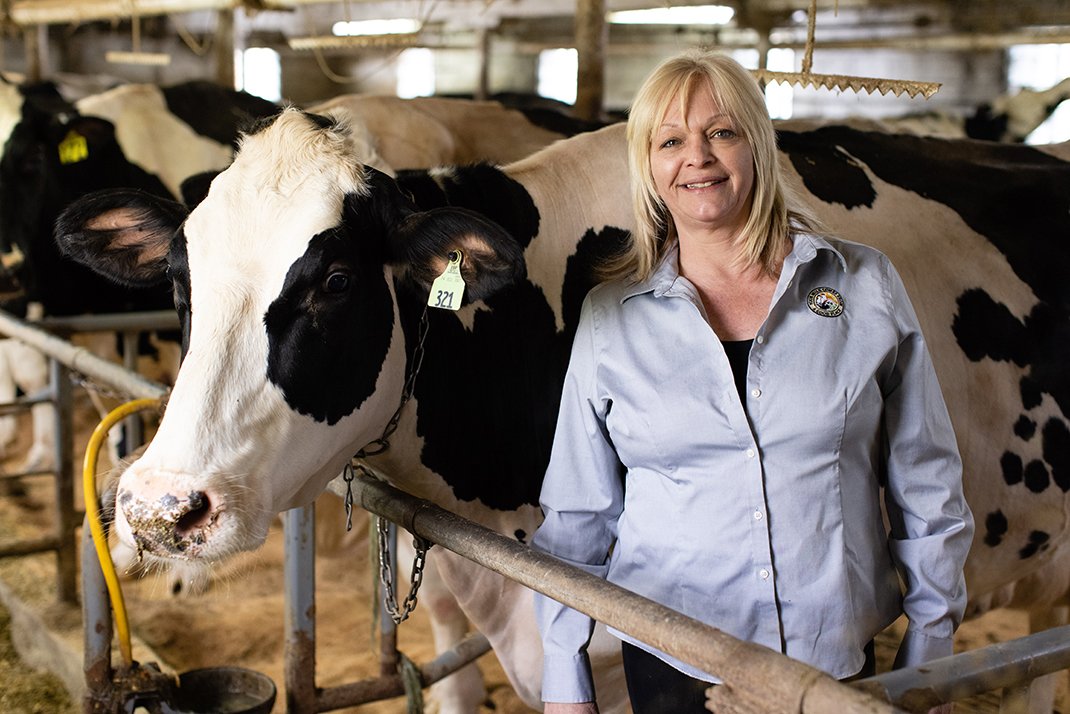
“We have had a pretty good start to 2026!” said Audrey Donahoe, president of American Dairy Association North East. “The Healthy Kids Act and the dietary guidelines; three servings of dairy and they are recommending whole milk too — so many good things started this year for dairy. That’s great. Actually, I always say our biggest challenge is the weather.”
She is a fifth generation farmer in Clayville.
“I am looking forward to this year. I don’t know if I have ever gone into a year so positively like I am this year. I think we are going to have a good year with all these great things happening around us.”
She said she doesn’t really see too many challenges in the new year.
“Just making sure that we are moving forward and sending a great message to people to continue to buy dairy,” she added. “What can we do to bring new consumers in and build that trust and demand — especially the kids. We are finding out that most families are purchasing whole milk. If they are drinking whole milk at home, that’s what they are going to want to drink at school. A lot of these food service people in these cafeterias they just want to see the kids eat and be healthy. Sometimes, it’s the only healthy meal kids get.”
The best way people can support dairy farmers is as simple as continuing to purchase and enjoy their favorite dairy products, she added.
She has about 100 milkers and right now is milking 82 head.
“I really don’t see anything major in the way of changes, other than like I said with these two great things happening for us as far as the healthy kids act and the dietary guidelines. I just think that consumers are going to be more desirable of our products,” Donahoe said.
Cornell Cooperative Extension
Cornell Cooperative Extension is always available to help farmers and support agriculture.
CCE is looking into the possibility of a county shared-use kitchen that could be rented by anyone interested in getting into value-added processing.
“This would be a 20C license kitchen, also known as an incubator kitchen, designed for new entrepreneurs looking to start a small food business in Oswego County,” said Joshua Vrooman, agriculture community educator at CCE’s Mexico office.
CCE also helped the town and village of Mexico start a brand-new farmers’ market — the Mexico Farmers’ Market. It started last summer and was supported by the local community, he added.
“It takes a lot of partners to get a farmers’ market off the ground and CCE Oswego played an important role providing guidance and consultation,” Vrooman said.
They are also working on the NYS Farm to School Program. There are three aspects to farm-to-school:
• Cafeteria: Involves serving fresh, local food in school meals and promoting these options to students.
• Classroom: Integrates food and agriculture education into the curriculum, including hands-on activities, nutrition program and school gardening.
• Community: Engages the broader community by building relationships between schools, local farmers, and families through activities like farm tours.
Keeping it local
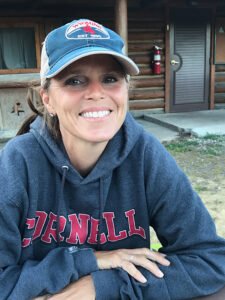
“From our standpoint, the consumer end of small to mid-sized production agriculture is strong in theory. People are still willing to pay a bit more for locally-sourced produce, meat and fiber products,” said Heather DelConte of Black Creek Farm in Volney. “People seem to want to know that their food was grown humanely, without large unknown chemical inputs and by people they trust.
“Unfortunately, everyone is feeling the pressure of higher prices, meaning less disposable income on the consumer side and higher production costs from inflated feed and supply costs on the producing side. I think the balance is tenuous as it exists and if this situation progresses into the future, I’m uncertain where small scale farmers will be. Personally, we still have a loyal local customer base, but we have been forced to raise prices, which has been disappointing.”
Stephanie Edwards, owner of Misty Acres Farm in New Haven, said high prices of supplies and unpredictable weather hurt her business.
“We have about 65 head of cattle (mostly beef) and we had a few pigs (we are down to one now). The current challenges we are facing right now and the most recent past are the rising costs of feed, fertilizer, diesel fuel, etc.,” said Stephanie Edwards, Misty Acres Farm, New Haven.
“The very unpredictable weather that we have been seeing the last few years — very wet spring, very dry summer and then the extreme lows and highs of the temperatures. We have lived our entire life in Oswego County, so we are used to the snow amounts, but that does cause its own issues when trying to farm. My husband also has a full-time job with CSX, which is why we can still afford to farm. We also run into some labor issues. We have three children still at home that do a lot to help with the running of our farm. We do hay in some neighboring fields and with the unpredictable weather we run into, we switched from small square bales of hay to round bales and also haylage (this only requires one to two days of good weather in a row rather than three or four).”


